
PACKAGING GUIDES
Custom Paper Bag Typography: A Practical Layout Guide
Start a custom paper bag layout with one clear focal point. Place the brand name where it can be read easily, keep secondary information separate, and review the artwork on the assembled bag before approval.
Decide what the bag should communicate
Write a short brief before arranging the artwork: the main brand message, the information that must appear, and the role of the bag in the retail experience. A shopping bag carrying a single purchase may need a different balance of information from a gift bag accompanying a boxed set.
Choose the primary message first. A logo, brand name or collection name can provide the focal point. Place website details, a short tagline or other secondary text in a supporting position so that they do not compete with it.
Build a clear reading order
Review the layout from the primary message to the smallest text. The reader should be able to identify the brand before looking for additional details. Compare the front, back and side panels together, rather than approving each panel as an isolated flat graphic.
Use spacing to separate messages. Keep essential lettering clear of folds, edges and handle positions on the proposed artwork. Confirm the usable print area with the bag specification instead of assuming that every part of the flat sheet will remain visible after assembly.
Balance lettering, patterns and empty space
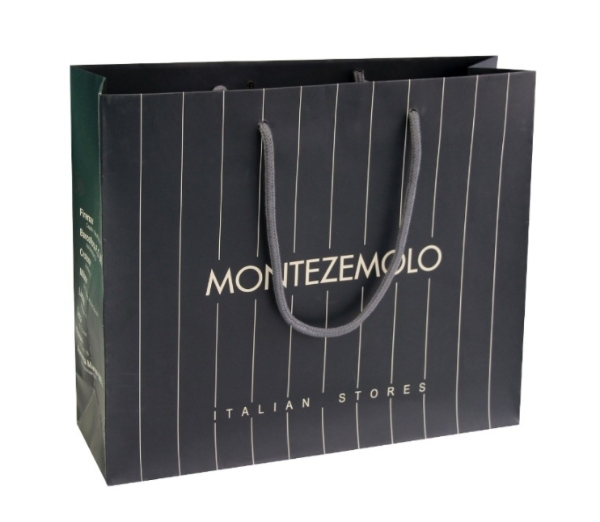
A decorative pattern can support the brand identity, but the text still needs room to be read. Check whether a patterned background makes small lettering difficult to distinguish. The bag example pairs vertical lines with a centered brand name. Confirm paper, ink and finishing separately in the project specification.
Compare two artwork versions at actual size. One can emphasize the logo while the other includes more supporting information. Review them with the product and any gift box that will be carried in the bag to judge the overall presentation.
Review the assembled sample
Check both sides of the bag, the side panels and the position of the handles. Read the smallest text without enlarging the artwork on screen. Verify spelling, logo proportions and the placement of required information against the approved artwork.
Record the artwork version and any changes requested during review. Approve the final file and sample together so that purchasing and design teams are working from the same layout. If the bag accompanies another package, compare the two pieces before approving their shared branding.


 Send Email
 yue.sandy
 WhatsApp
 WeChat